
Choosing to pursue certification to a standard like ISO 9001 can look like a lot of work and an unnecessary burden, particularly to a small company: a lot of effort, documentation, and lots of money. Is that investment in vain? I don’t think so.
ISO 9001 is all about improving consistency in your processes, reducing errors, and generally working more efficiently. It makes quality management more reliable and customer-focused which can improve customer satisfaction. It also helps with compliance and risk management, and becomes relevant as you grow, since some customers or industries expect a certified quality management system.
So at MINRES, we chose to go for ISO 9001 while we are still a small team. We didn’t have a strange love of documenting everything, but we do think it’s worth investing the time and effort now so that, as we grow, it will be easier to maintain the right processes, structure and habits. If we wait until we’ve grown it would be a lot more difficult. With a smaller team, communication and decision-making can also be simpler. You can introduce structure today without fighting against existing complexity. It makes a lot of sense to build a system that is both compliant and practical from the start.
There was also a strategic reason behind it. No matter which direction we take in the future, more specialized certifications are likely to be necessary. In functional safety, aerospace, defense, or other regulated environments, it will be assumed that we have a solid quality management foundation in place. ISO 9001 was the logical starting point.
What we didn’t fully expect was this: once the system was in place, it stopped feeling like a certification exercise and became genuinely useful.
The QMS helped us clarify responsibilities, describe and improve processes, and reduce ambiguity. It created a shared understanding of how we work and made the company easier to organize and to scale. The management planning and review cycle provided a good opportunity to focus on strategic goals and priorities and constantly update the company’s plans according to the current situation.
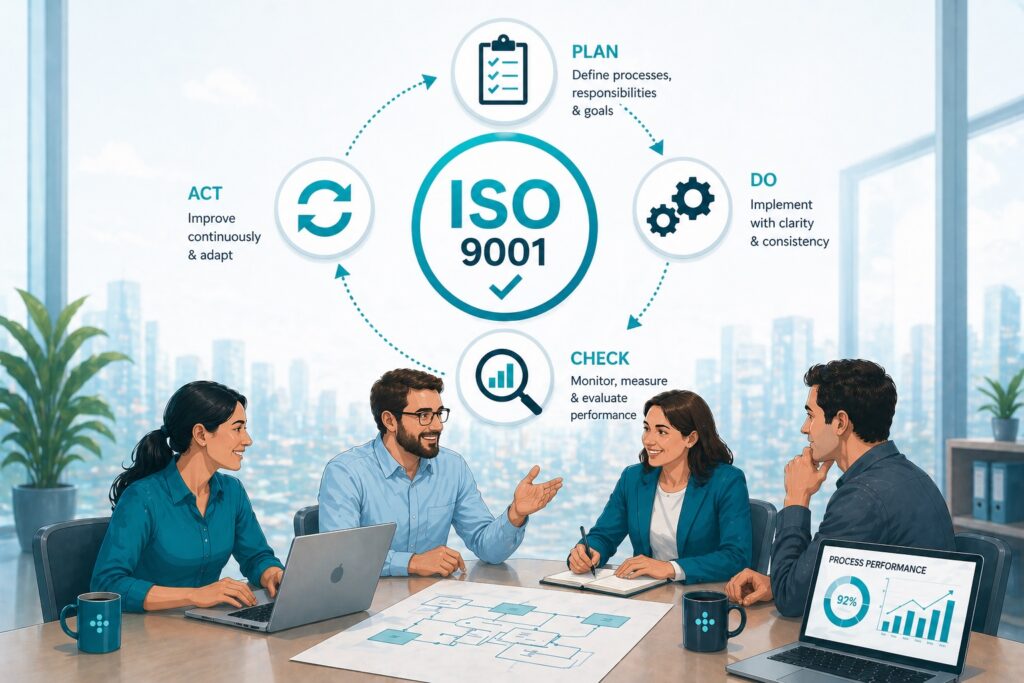
That said, getting there requires a fair amount of initial investment. Implementing a standard is not easy without proper guidance. The requirements are intentionally generic, and translating them into something that fits your own organization takes time, discipline, and experience.
What made a real difference for us was having experienced support. We had the support of Ascendo to help us interpret the standard correctly, avoid the common pitfalls, and stay pragmatic. It meant that, instead of over-engineering the system, we focused on what would add value.
After going through ISO 9001 certification, starting work on ISO 27001 certification didn’t feel quite so intimidating. The structure, mindset, and many core elements were already familiar or even already in place after our work on ISO 9001.
Over time, the ISO 9001 process has also changed (for the better) how we work as a team. We no longer start from scratch every time – many processes are now clearly defined, which reduces ambiguity and saves time. It makes expectations visible, and decisions are less based on assumptions and more on a shared understanding of priorities and risks.
Looking back, this was not about getting a certificate for the wall. It was about building a system that helps us run the company better on a day-to-day basis. And that means, for a small business, there is a lot to be said for starting the ISO 9001 process early.
What has been your experience?